
- 1 What is Diastema (Gapped Teeth)?
- 2 The Primary Causes Behind Tooth Gaps
- 3 Modern Treatment Options for Closing the Gap
- 4 The Role of Gum Health in Tooth Spacing
- 5 Frequently Asked Questions About Diastema
- 5.1 Can Diastema (Gapped Teeth) cause speech problems?
- 5.2 Is treatment for Diastema (Gapped Teeth) purely cosmetic?
- 5.3 Will a gap in a child’s teeth close on its own?
- 5.4 How much does it cost to fix Diastema (Gapped Teeth)?
- 5.5 Can I use “DIY” bands to close a gap?
- 5.6 Latest Blogs
- 5.6.0.1 Freddie Freeman Teeth: A Diamond Standard Transformation and Guide
- 5.6.0.2 The Ultimate Transformation of Ashby Gentry Teeth: A Modern Celebrity Dental Guide
- 5.6.0.3 The Ultimate Guide to Walton Goggins Teeth: Trauma, Transformation, and Triumph
- 5.6.0.4 The Ultimate Guide to Flossing: Why Brushing Is Only Half the Job
What is Diastema (Gapped Teeth)?
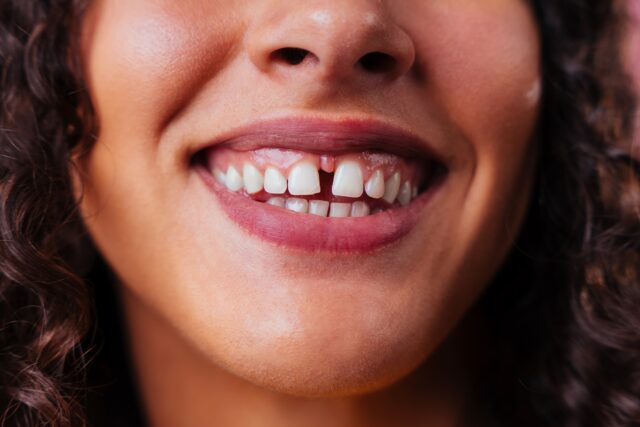
Diastema (Gapped Teeth) is a common dental condition characterized by a visible space or gap between two or more teeth, most frequently occurring between the two upper front incisors. While many people embrace these gaps as a unique part of their appearance, others seek professional intervention because Diastema (Gapped Teeth) can sometimes lead to functional issues or self-consciousness regarding their smile. Understanding that this condition can be caused by a variety of factors—ranging from genetics and jaw size to specific oral habits—is the first step in determining whether you need a cosmetic fix or a functional treatment to protect your oral health.
The Primary Causes Behind Tooth Gaps
To effectively address Diastema (Gapped Teeth), it is essential to identify the underlying reason why the space formed in the first place. These causes can be developmental, such as genetic factors and jaw proportions, or structural issues like the overgrowth of the labial frenum. Additionally, the chronic impact of oral habits and tongue thrusting plays a significant role in how these spaces evolve over time.
Genetic Factors and Jaw Proportions
One of the most frequent reasons for Diastema (Gapped Teeth) is a simple mismatch between the size of the jawbone and the size of the teeth. If an individual inherits a large jaw but relatively small teeth, there will be excess room in the dental arch, naturally resulting in gaps. Because these traits are hereditary, you will often find that this condition runs in families.
Overgrowth of the Labial Frenum
The labial frenum is the small piece of tissue that connects the inside of your upper lip to your gum tissue. In some cases, this tissue grows too large or too low, extending down between the incisors. This physical barrier prevents the teeth from closing together naturally, creating a persistent Diastema (Gapped Teeth) that usually requires a minor surgical procedure called a frenectomy to resolve.
Impact of Oral Habits and Tongue Thrusting
Behavioral habits can physically push teeth apart. Tongue thrusting, where the tongue presses against the front teeth during swallowing, exerts constant pressure that can lead to gaps over time. Similarly, prolonged thumb sucking can shift the alignment of the dental arch, creating a gap that persists long after the habit has stopped.
Modern Treatment Options for Closing the Gap
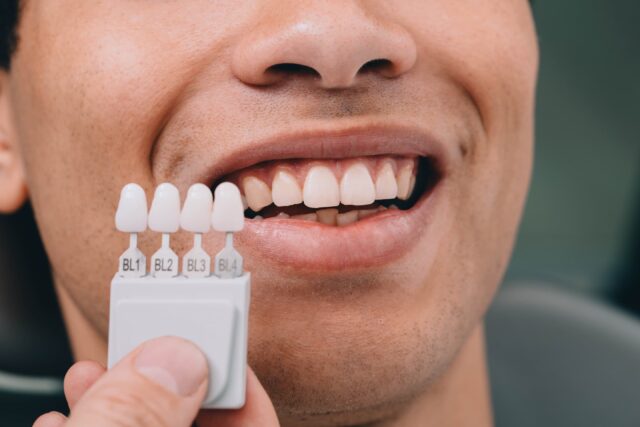
The field of cosmetic dentistry offers several highly effective ways to fix Diastema (Gapped Teeth), depending on the size of the gap and the patient’s long-term goals. For minor adjustments, many patients choose dental bonding for quick results, while others prefer porcelain veneers for a total transformation. In cases involving broader alignment issues, orthodontic solutions and clear aligners remain the gold standard for creating a seamless smile.
Dental Bonding for Quick Results
For small to moderate gaps, dental bonding is often the preferred solution. In this procedure, the dentist applies a tooth-colored composite resin to the edges of the teeth surrounding the Diastema (Gapped Teeth). The resin is sculpted to close the space and then hardened with a special light. It is a fast, non-invasive way to treat the gap in a single visit.
Porcelain Veneers for a Total Transformation
If you are looking for a more durable and aesthetic overhaul, porcelain veneers are an excellent choice. These thin, custom-made shells are bonded to the front of the teeth, effectively masking any Diastema (Gapped Teeth) while also improving the color and shape of the smile. Veneers are highly resistant to staining and provide a permanent solution.
Orthodontic Solutions and Clear Aligners
When Diastema (Gapped Teeth) is caused by overall tooth misalignment, braces or clear aligners may be necessary. These treatments work by applying gradual pressure to shift the teeth into their proper positions, closing the gap by moving the actual roots of the teeth. This is often the best approach for maintaining long-term stability and ensuring a healthy bite.
The Role of Gum Health in Tooth Spacing
It is important to note that Diastema (Gapped Teeth) is not always a permanent fixture; sometimes, gaps can develop later in life due to health changes in the oral cavity.
Periodontal Disease and Tooth Migration
Advanced gum disease can weaken the bone and ligaments that hold your teeth in place. As the support structure diminishes, the teeth can begin to “fan out,” creating a newly formed Diastema (Gapped Teeth). In these cases, the gum disease must be treated first before any cosmetic work can be done.
Preventing the Recurrence of Gaps
Once a Diastema (Gapped Teeth) has been closed, especially through orthodontic means, the teeth have a natural tendency to want to return to their original positions. Wearing a retainer as prescribed by your dentist is crucial to ensure that the gap does not reappear over time.
Frequently Asked Questions About Diastema
Closing a gap in your smile is a significant decision. Here are answers to common questions regarding the management of this condition.
Can Diastema (Gapped Teeth) cause speech problems?
In some instances, especially when the gap is large, Diastema (Gapped Teeth) can lead to a slight lisp or cause air to escape while speaking. Closing the gap often resolves these minor speech impediments.
Is treatment for Diastema (Gapped Teeth) purely cosmetic?
While many seek treatment for aesthetic reasons, correcting Diastema (Gapped Teeth) can also improve oral hygiene. Large gaps can trap food particles and make it easier for plaque to accumulate, potentially leading to decay.
Will a gap in a child’s teeth close on its own?
It is very common for children to have gaps when their primary teeth are falling out. In many cases, as the larger adult teeth erupt, the Diastema (Gapped Teeth) will close naturally without the need for dental intervention.
How much does it cost to fix Diastema (Gapped Teeth)?
The cost varies greatly depending on the method. Dental bonding is typically the most affordable way to treat Diastema (Gapped Teeth), while veneers and orthodontics represent a higher financial investment for long-lasting results.
Can I use “DIY” bands to close a gap?
Absolutely not. Attempting to close Diastema (Gapped Teeth) using rubber bands can cause severe damage to the roots of your teeth and even lead to tooth loss. Always consult a professional.
Latest Blogs