
Evaluating all on 4 vs all on 6 dental implants helps patients with extensive tooth loss determine the most effective surgical solution for full-arch oral rehabilitation. Opting for advanced all on 4 implants Turkey allows individuals to restore full oral function, jawbone structure, and facial aesthetics using modern computer-guided implantology. Both full-arch concepts eliminate the need for individual root replacements by placing a fixed, full-arch prosthetic bridge onto strategically angled titanium posts. While both treatment modalities provide life-changing outcomes, key clinical differences in bone density demands, chewing load distribution, and surgical complexity determine which system delivers optimal long-term success for your unique anatomical profile.
Understanding Full-Arch Reconstruction Concepts
Full-arch implant reconstruction is designed to replace an entire upper or lower row of missing teeth using a fixed, permanent dental bridge supported by dental implants. Traditional full-mouth restorations historically required placing eight to ten individual implants per jaw, often necessitating extensive bone grafting and prolonged healing phases. Modern prosthodontics leverages biomechanical tilting principles, anchoring implants into the denser anterior regions of the jawbone to maximize contact area without invading sensitive sinus cavities or nerve pathways.
This approach creates a rigid, stable foundation capable of supporting an entire fixed bridge. By anchoring high-strength prosthetic materials directly into the jawbone, these treatment concepts prevent progressive bone resorption, restore complete chewing efficiency, and eliminate the instability associated with removable dentures.
Key Differences Between All-on-4 and All-on-6 Dental Implants
When evaluating all on 4 vs all on 6 dental implants, the primary distinctions lie in the structural distribution of mechanical forces, necessary anatomical support, and overall surgical protocols.
1. Number of Implants and Bite Force Distribution
The fundamental difference between these two treatment approaches is the total number of structural supports embedded into the jawbone.
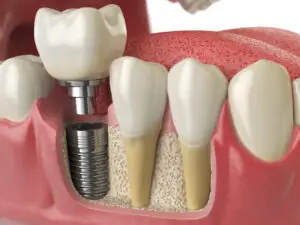
The All-on-4 technique utilizes four titanium implants per arch—two straight anterior implants placed vertically in the front of the jaw and two posterior implants tilted at angles up to 45 degrees. Tilted rear implants maximize contact with existing bone density while distributing bite forces across a four-point foundation.
The All-on-6 protocol incorporates six implants per arch, providing two additional posterior anchors. Placing additional posts increases the total surface area bonded to the jawbone, creating superior load distribution across the full dental arch. This extra support reduces mechanical strain on individual implants, making it an ideal choice for patients with higher bite forces or those restoring the upper jaw, where natural bone density is inherently lower.
2. Jawbone Density and Bone Grafting Requirements
Bone quantity and quality play a decisive role in determining whether a four-implant or six-implant configuration is clinically suitable.
Full-arch candidacy depends on several critical structural factors evaluated during your initial examination:
Patients who have suffered significant, long-term bone loss often qualify for the four-implant method because the angled posterior placement bypasses depleted areas without requiring preparatory bone augmentation.
The six-implant approach demands greater bone volume and width across the entire arch to accommodate the additional posts securely.
When bone height is insufficient for six posts, bone grafting or sinus lift procedures must be performed prior to or during implant placement to establish a solid foundation.
Evaluating jaw structure through 3D CBCT scans allows your clinician to determine whether your natural bone can support six posts directly or if a four-post protocol provides a safer, graftless solution.
3. Treatment Timeline and Surgical Complexity
Surgical execution and restoration timelines vary based on the number of implants placed and whether pre-surgical bone augmentation is required.
The four-implant system is widely recognized for its streamlined timeline. Because angled placement frequently eliminates the need for bone grafting, many patients qualify for immediate loading—receiving a functional temporary fixed bridge on the same day as surgery.
Placing six implants involves a slightly more complex surgical intervention, requiring precise spacing and parallel alignment across six anchorage points. If preparatory bone grafting or sinus lifting is required to support the additional posts, the overall healing timeline may extend by 3 to 6 months before the final permanent prosthetic bridge can be safely attached.
Comprehensive Comparison: All-on-4 vs. All-on-6 Dental Implants
Comparing the core clinical parameters of both full-arch restoration protocols clarifies their respective structural advantages and anatomical requirements.
| Feature / Criteria | All-on-4 Implants | All-on-6 Implants | Clinical Recommendation |
| Number of Posts | 4 implants per jaw | 6 implants per jaw | Determined by available bone volume and arch width |
| Bone Density Needed | Moderate to minimal bone density | Moderate to high bone density | Four implants suited for resorbed jaws; six require robust bone |
| Grafting Requirement | Rarely required due to angled placement | Occasionally required (sinus lifts or ridge augmentation) | Four implants preferred when avoiding grafting is a priority |
| Bite Force Distribution | Good load distribution across 4 points | Superior load distribution across 6 points | Six implants recommended for heavy chewers or bruxism cases |
| Ideal Candidate | Patients with mild-to-moderate bone loss seeking fast restoration | Patients with strong bone density seeking maximum long-term stability | Tailored to individual 3D CBCT diagnostic findings |
Which Full-Arch Solution Is Right for You?
Selecting between four-implant and six-implant restoration strategies requires a comprehensive diagnostic evaluation of your oral health, jawbone architecture, and functional expectations. Neither treatment is universally superior; rather, the optimal choice depends entirely on matching the correct biomechanical framework to your specific anatomical conditions.
Patients with significant posterior bone loss, those wishing to avoid bone grafting surgeries, or individuals seeking an immediate-load temporary bridge often benefit most from the four-implant protocol. Conversely, patients with high jawbone density, broader jaw dimensions, or severe bruxism (teeth grinding) are better suited for the six-implant protocol due to its enhanced mechanical distribution and extra structural redundancy.
Next Steps for Your Smile Restoration
Comparing all on 4 vs all on 6 dental implants demonstrates that both full-arch techniques offer transformative solutions for individuals suffering from severe tooth loss. Whether your treatment plan utilizes a four-post angled framework to bypass bone loss or a six-post configuration for maximum load distribution, modern prosthodontic protocols deliver exceptional aesthetic harmony and long-term chewing performance. Partnering with experienced implant specialists ensures your treatment plan is tailored precisely to your jawbone structure, functional needs, and personal goals.
Ready to restore your smile with a permanent full-arch solution? Contact our expert clinical team today to schedule your personalized 3D consultation, receive a comprehensive diagnostic evaluation, and discover the ideal full-arch treatment plan for your needs.
Frequently Asked Questions
Below, you will find quick and clear answers to the most common questions regarding all on 4 vs all on 6 dental implants.