
Modern restorative dentistry is grounded in biomimetic principles that prioritize the preservation of natural tooth structure while achieving functional and aesthetic balance. In clinical practice, aggressive preparation and full-coverage crowns are not universally indicated for cosmetic corrections; instead, conserving sound enamel remains the cornerstone of long-term biological success. When considering options for laminate veneers Turkey, patients benefit most from conservative treatment planning that utilizes ultra-thin 0.3mm to 0.5mm porcelain shells to address localized defects. By adhering to non-invasive preparation protocols, prosthodontists protect the structural integrity of the tooth, maintain pulp vitality, and optimize the strength of adhesive bonding. Understanding the precise medical indications and diagnostic criteria for laminate veneers ensures that aesthetic enhancements are achieved without sacrificing the biological longevity of healthy teeth.
1. Ideal Candidates: When Are Laminate Veneers Clinically Indicated?
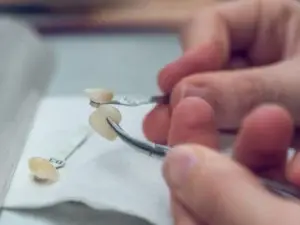
Determining candidacy for minimally invasive porcelain restorations requires a thorough clinical assessment of structural sound enamel and occlusal dynamics. Applying laminate veneers Turkey protocols is medically indicated when the primary goal is to address superficial aesthetic anomalies without compromising underlying biological tissues.
Clinical indications for conservative ceramic laminates include:
Intrinsic tooth discoloration and severe fluorosis resistant to professional chemical bleaching procedures. Minor structural defects such as localized enamel chips, micro-cracks, or developmental incisal irregularities. Diastemas and small interdental spaces where conservative contouring can close gaps without orthodontic intervention. Mild rotational misalignment or minor arch length discrepancies where full orthodontic alignment is declined by the patient.
Adhesion is a primary factor in the clinical success of porcelain laminates. Micromechanical bonding resin forms its strongest and most durable interface when applied directly to intact enamel rather than exposed dentin. High enamel availability ensures minimal micro-leakage and long-term retention of the restoration.
2. Clinical Contraindications: When Veneers Are Not Recommended
While porcelain laminates offer significant aesthetic advantages, specific clinical conditions preclude their use to prevent restorative failure and biological damage. Evaluating candidate suitability for laminate veneers Turkey requires identifying underlying pathologies that compromise bonding efficacy or structural support.
Primary clinical contraindications for laminate veneer placement include:
High caries activity or widespread, active periodontal disease that destabilizes the supporting marginal tissue. Insufficient remaining enamel depth caused by severe erosion, attrition, or prior aggressive dental preparation. Severe sleep bruxism or untreated parafunctional habits that generate excessive shear forces on thin ceramic margins. Significant anterior crowding, edge-to-edge occlusion, or severe deep bites that prevent adequate mechanical clearance.
Placing thin porcelain laminates under uncorrected high-load forces or over compromised enamel frequently leads to ceramic fracture, debonding, or accelerated marginal breakdown. In such scenarios, preliminary stabilization or alternative restorative approaches must be prioritized.
3. The 30-50% Rule: When Veneers Are Not Enough
When structural tooth loss exceeds 30% to 50% due to extensive decay, trauma, or large preexisting restorations, conservative laminates can no longer provide adequate biomechanical support. In these compromised clinical scenarios, full-coverage crowns become necessary to distribute occlusal stresses across the entire coronal structure and prevent catastrophic tooth fracture.
Restorative guidelines emphasize the necessity of preserving healthy dental tissue whenever possible. The UK General Dental Council (GDC) explicitly advises clinicians against performing invasive, full-coverage crown preparations on structurally sound teeth solely for minor aesthetic modifications. Maintaining original tooth morphology preserves pulp health, reduces the risk of post-operative endodontic complications, and leaves future treatment options intact.
4. Diagnostic Precision: Digital Smile Design and Bonding Protocols
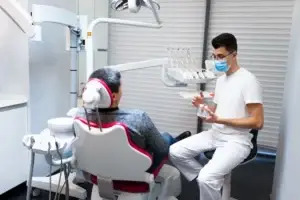
Achieving clinical precision in ceramic laminate therapy requires a structured, multi-stage diagnostic and execution framework. The process utilizes intraoral 3D digital scanners and CAD/CAM Smile Design software to map marginal boundaries, evaluate occlusal clearances, and simulate final contours before any tooth preparation begins.
Inaccurate preparation depth or improper adhesive bonding protocols can lead to marginal discrepancies, localized micro-leakage, chronic gingival inflammation, and thermal hypersensitivity due to pulp irritation. Utilizing high-precision intraoral digital diagnostics ensures minimal tooth reduction, precise marginal fitting, and a bio-compatible interface with surrounding periodontal tissues.
5. Accredited Safety: JCI and TEMOS Protocol Standards
Patient safety and treatment efficacy depend heavily on institutional adherence to internationally audited clinical protocols. Facilities operating under Joint Commission International (JCI) accreditation and TEMOS “Excellence in Dental Tourism” certifications maintain rigorous standards for infection control, material traceability, and clinical auditing. Evaluating accredited options for laminate veneers Turkey ensures that care delivery aligns with global safety benchmarks.
Ethical treatment protocols dictate that clinicians provide full informed consent, presenting all viable options—including chemical whitening, composite bonding, and orthodontics—alongside ceramic laminates. This transparent diagnostic approach aligns with directives from the National Health Service (NHS), which clarify that aesthetic veneers are elective procedures unless required for clear medical or functional rehabilitation.
Frequently Asked Questions
Below, you will find clear, evidence-based answers to common clinical questions regarding veneer indications and tooth preservation.