
Receiving an initial digital estimate based on photos or 2D X-rays provides a helpful starting point, but evaluating dental implants Turkey safety requires understanding that an online treatment plan remains strictly provisional until verified through a physical examination and 3D Cone Beam Computed Tomography (CBCT). Remote photographs and flat radiographs cannot measure volumetric bone density, map precise nerve pathways, or detect underlying tissue infections. A responsible clinical approach prioritizes diagnostic accuracy over rigid travel schedules, ensuring that your actual surgical treatment is tailored precisely to your real-time anatomical conditions to guarantee long-term health, safety, and predictable functional results.
1. Why Photos and 2D X-Rays Offer Only a Preliminary View
Conventional two-dimensional photographs and standard panoramic X-rays provide an overview of your oral cavity, but they possess diagnostic limitations that prevent them from serving as a final surgical roadmap. When assessing dental implants Turkey safety, relying solely on two-dimensional visuals introduces clinical blind spots that must be addressed prior to any invasive intervention.
2D panoramic X-rays lack volumetric depth, making it impossible to measure jawbone width and density accurately.
Vital anatomical landmarks, such as nerve pathways and sinus contours, remain partially obscured in two-dimensional images.
Photographs cannot detect soft tissue pathology, periodontal pockets, or localized active gum inflammation.
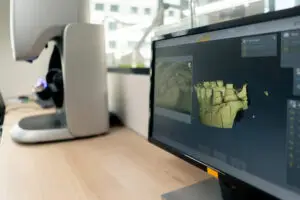
Three-dimensional CBCT scanning resolves these diagnostic limitations by capturing sub-millimeter cross-sectional slices that allow the surgical team to evaluate exact bone volume, density, and neural pathways before treatment begins.
2. When Surgical Treatment Must Be Postponed: Active Infections and Periodontal Disease
Biological health must always take precedence over pre-arranged travel itineraries or rapid treatment timelines. Placing a titanium implant into an compromised biological environment significantly increases the risk of early fixture failure, peri-implantitis, or systemic bacterial dissemination. Maintaining high standards for healthy teeth and gums requires identifying and treating active periapical abscesses, periodontitis, or severe unexpected bone resorption before initiating surgical procedures. Identifying these hidden biological factors in person and pausing surgery is not a setback; it is the fundamental hallmark of protective, ethically sound dentistry that safeguards your long-term health.
3. How Clinical Findings Can Adjust Your Final Treatment Plan and Cost
In-person examinations frequently uncover biological nuances that require refining your initial online estimate to ensure long-term stability. The following table illustrates how real-time diagnostic findings guide necessary adjustments when evaluating dental implants Turkey safety.
| Initial Online Assessment | Potential In-Person Clinical Finding | Necessary Plan Adjustment |
| Standard Implant Placement | Severe localized bone resorption or knife-edge ridge | Addition of guided bone regeneration (GBR) or sinus floor elevation |
| Immediate Loading Protocol | Low primary insertion torque ($<35\text{ Ncm}$) due to soft trabecular bone | Transition to a staged, two-phase healing protocol with a delayed loading timeline |
| Planned Tooth Retention | Hidden vertical root fracture or non-restorable subgingival decay | Extraction of the compromised tooth followed by immediate or site-preserved placement |
| Single Tooth Restoration | Active generalized periodontitis and subgingival infection | Mandatory hygiene phase and periodontal stabilization prior to implant surgery |
Adapting the surgical approach to match accurate clinical data ensures every fixture is anchored within healthy, structurally sound bone.
4. Documentation Transparency: Implant Passports and Medical Records
Complete transparency requires providing patients with verifiable, globally recognized medical records upon finishing treatment. Every patient receives an official International Implant Passport detailing exact fixture specifications, including premium manufacturer systems like Straumann or Medentika, batch lot numbers, dimensions, and surface characteristics. Combined with digital copies of pre- and post-operative 3D CBCT scans, this documentation guarantees seamless continuity of care with any dental professional worldwide.

5. Emergency Protocols and In-Clinic Complication Management
Operating within a dedicated, hospital-grade surgical setting ensures intraoperative variables are handled with absolute clinical safety.
Dedicated surgical suites with controlled climate and sterile field isolation.
Standardized emergency medical kits, vital sign monitoring, and specialized surgical oversight for immediate risk management.
Patient-specific post-operative pharmacological protocols based on comprehensive medical histories.
Maintaining these rigorous clinical protocols safeguards patient health throughout every phase of the surgical procedure.
6. Returning to the UK: Continuity of Care and Aftercare Protocols
Surgical care extends beyond the operating room through structured post-operative monitoring and remote clinical follow-ups at regular intervals after you return home. The UK’s General Dental Council advises patients considering overseas dental treatment to understand who is treating them, ensure they have a clear treatment plan, and know how follow-up care will work once they return home. Furthermore, NHS England confirms that patients who have received self-funded dental treatment abroad and later require intervention due to a complication are entitled to access NHS dental care for assessment and stabilisation.
7. The Role of JCI and TEMOS International Accreditations in Patient Safety
Independent accreditations provide objective verification of a clinic’s commitment to safety, surgical excellence, and ethical international patient care. When reviewing dental implants turkey safety, choosing an accredited facility guarantees adherence to strict global benchmarks:
Joint Commission International (JCI) Accreditation: As Turkey’s first JCI-accredited dental clinic, Esnan maintains strict compliance with surgical safety protocols, infection control standards, and patient rights.
TEMOS International Accreditation: Specialized in medical tourism ethics, Esnan completed its TEMOS re-accreditation audit for “Excellence in Dental Tourism” with the highest possible score in December 2025.
ISO Quality Standards: Certified adherence to ISO 9001 and ISO 10002 frameworks ensures continuous monitoring and refinement of administrative and clinical care pathways.
These rigorous accreditation frameworks guarantee that your entire care pathway is governed by audited international quality standards.
Patient Safety Checklist Before Travelling
[ ] Have I received a clear written statement confirming that my online treatment plan is provisional?
[ ] Do I know who my surgeon is and what their specific qualifications are?
[ ] Will a 3D CBCT scan be conducted before any surgical intervention begins?
[ ] Will I be given an official Implant Passport with lot numbers upon completion?
[ ] Do I have a documented aftercare plan for when I return to the UK?
[ ] Has the clinic explained how potential clinical adjustments or complications will be handled?
Prioritizing Surgical Safety Over Rapid Timelines
Achieving a successful, permanent oral reconstruction requires prioritizing biological safety and diagnostic thoroughness over rigid travel itineraries. Choosing an accredited clinic that bases final treatment decisions on real-time 3D CBCT diagnostics ensures your restored smile is built on a healthy, lasting foundation.
Frequently Asked Questions
Below, you will find clear, evidence-based answers to the most common questions regarding clinical protocols and patient safety.