
Choosing the right tooth replacement after tooth loss starts with understanding how each restorative option works in daily life, and comparing dental implants vs bridges alongside removable dentures helps you weigh structural support, neighboring teeth, and long-term maintenance clearly. Missing teeth affect chewing efficiency, bite balance, and jawbone support, yet no single restoration fits every mouth or timeline. At Esnan Dental Clinics, our surgical and prosthodontic specialists evaluate each patient through digital diagnostics and structured clinical criteria so expectations stay realistic from day one. Comparing fixed and removable options side by side makes it easier to match clinical trade-offs with your oral health goals.
How Dental Implants, Bridges, and Dentures Differ in Structure and Function
Each tooth replacement method restores chewing mechanics and appearance in a different way, depending on whether it anchors into bone, attaches to neighboring teeth, or rests on soft tissue. Understanding these structural differences clarifies how forces transfer during biting and speaking.
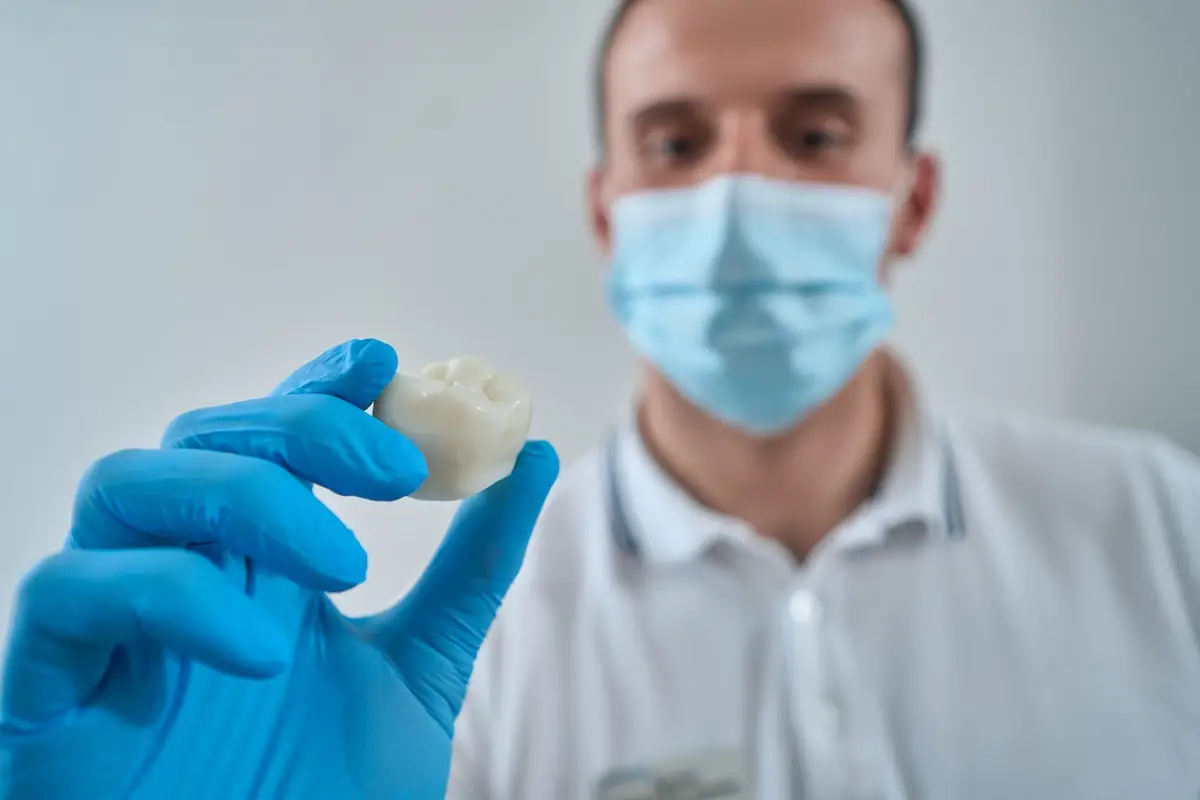
A dental implant replaces the missing tooth root with a biocompatible post placed into the jawbone, supporting a single crown, a multi-unit bridge, or an implant-retained prosthesis. Because the post integrates with surrounding bone, it functions independently without relying on adjacent natural teeth for support. Learn more about the clinical workflow on our dental implants in Turkey page.
A dental bridge spans a gap using one or more artificial teeth joined to crowns placed on prepared abutment teeth on either side, or occasionally onto implant supports. Removable dentures consist of full or partial acrylic and metal prostheses that rest over the gums and ridges, with some designs clipped or attached to implants for added stability. You can explore how these restorative categories fit into broader care plans across our treatment options.
Comparing Dental Implants vs Bridges Across Key Clinical Factors
Evaluating dental implants vs bridges involves looking past upfront appearance and examining how each option interacts with bone biology, neighboring enamel, daily cleaning, and treatment schedules. Each factor carries practical advantages and limitations that a clinician reviews during planning.
When a natural tooth is lost, the alveolar bone in that area no longer receives root stimulation and gradually resorbs over time. Dental implants transmit biting loads into the jawbone, helping maintain bone volume and facial contour where roots are placed, whereas conventional tooth-supported bridges do not stimulate bone beneath the missing-tooth span.
Bridges require reshaping adjacent teeth to hold crowns, which removes healthy tooth structure and places extra functional load on those abutment teeth even if they are sound. Implants leave neighboring teeth untouched, though placing an implant requires adequate local bone volume or preliminary grafting when bone is thin.
Daily hygiene also differs noticeably between fixed restorations and removable appliances. A single implant crown is cleaned much like a natural tooth with brushing and interdental care, while a bridge requires threading floss or using interdental brushes underneath the pontic to prevent plaque buildup around abutment margins.
Treatment timelines vary as well: a conventional bridge can often be completed within a few weeks once teeth are prepared, whereas implant therapy may involve healing intervals for bone integration before final prosthetic placement. Deciding between dental implants vs bridges depends on existing tooth health, bone dimensions, medical history, and how quickly a fixed restoration is needed.

Where Removable Dentures Fit Into Tooth Replacement Planning
Removable partial or complete dentures remain a practical option when multiple teeth are missing across a dental arch or when anatomical, medical, or staged treatment factors make fixed restorations unsuitable right away. Modern partial dentures can replace several teeth in different zones of the mouth without requiring crowns on every remaining tooth.
In staged care plans, a removable prosthesis can also serve as an interim solution while gums and bone heal after extractions or grafting. While removable dentures can restore basic speech and chewing function at a lower initial complexity, they generally offer less biting stability than fixed restorations and require daily removal for thorough cleaning and overnight tissue rest.
Evaluating Your Options With a Specialist
Choosing among implants, bridges, and dentures requires objective clinical data rather than assumptions based on general descriptions alone. Gum health, remaining root support, bite alignment, and bone height all shape which option will hold up reliably over time.
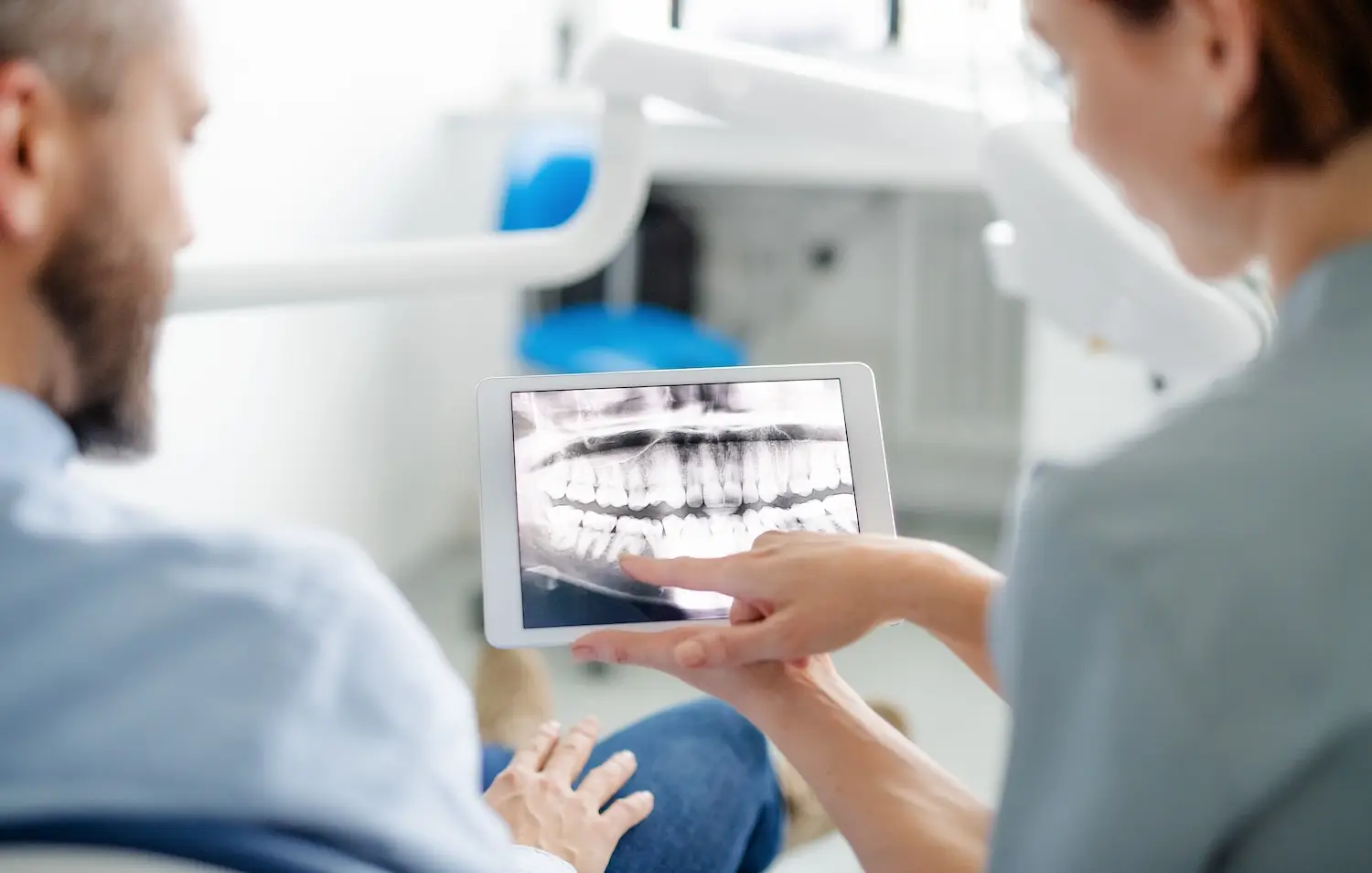
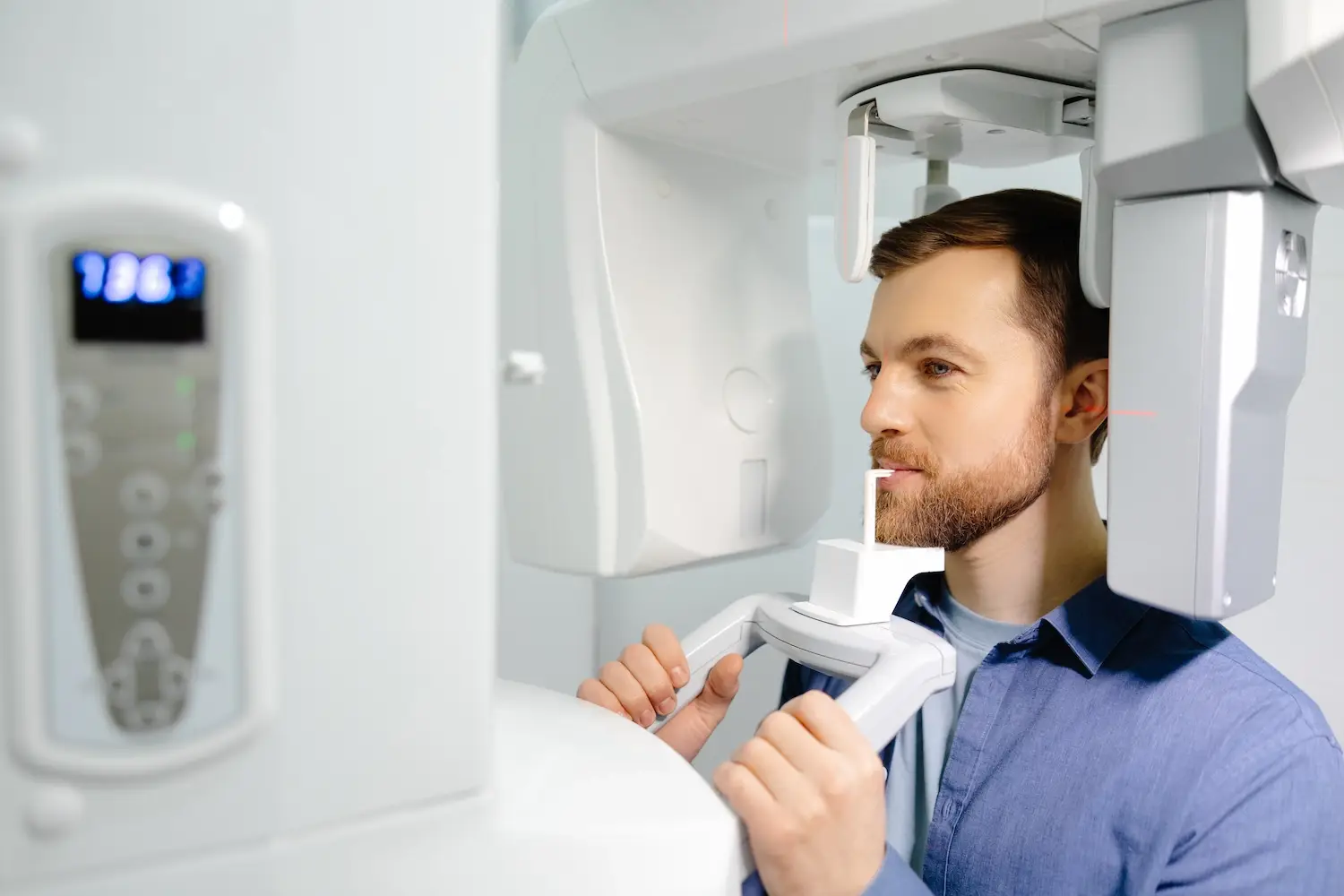
At Esnan Dental Clinics, multidisciplinary planning pairs panoramic imaging and 3D cone beam computed tomography (CBCT) with a thorough intraoral exam to measure bone dimensions and evaluate neighboring teeth. Reviewing scan findings directly with a specialist clarifies where an implant, bridge, or denture is clinically appropriate and what preparatory steps may be involved. In short, comparing dental implants vs bridges alongside removable dentures comes down to balancing bone preservation, adjacent tooth protection, daily care habits, and your individual oral anatomy so your final restoration functions reliably over the long term.

Compare Your Tooth Replacement Options With Our Specialists
If you are weighing fixed and removable options for one or more missing teeth, sharing recent panoramic X-rays or 3D CBCT scans with our clinical team can help clarify your starting point. Request an online preliminary review with Esnan Dental Clinics specialists to discuss clinical suitability and transparent next steps before planning travel.
Frequently Asked Questions
Below are answers to common questions patients ask when comparing tooth replacement treatments and planning long-term restoration.